From the Apothecary: Chamomile
Share
Matricaria chamomilla — perhaps the most beloved herb in the apothecary. Gentle, beautiful, and extraordinarily useful. Its apple-scented flowers have been used for centuries to soothe, calm, and comfort — and they're just as relevant today.
What It Is
German chamomile is a hardy annual that grows to around 60cm, with feathery, finely divided leaves and cheerful white daisy flowers with raised yellow centres. It self-seeds freely and, once established, will return year after year with minimal effort. Roman chamomile (Chamaemelum nobile) is a lower-growing perennial — both are useful, though German chamomile is the one most commonly used in skincare.
Chamomile for Skin
Chamomile is one of the most soothing botanicals available for sensitive, reactive, or irritated skin. It's been used in traditional European herbalism for generations — not as a trend, but as a reliable, gentle workhorse.
It's particularly well suited to skin that's red, reactive, or easily upset — whether from weather, hard water, or simply being sensitive by nature. A chamomile facial steam is one of the oldest and simplest skin rituals, and for good reason.
Simple Chamomile Facial Steam
A facial steam opens pores and allows the plant's properties to work directly on the skin. It takes five minutes and costs almost nothing.
You'll need:
- 2 tbsp dried chamomile flowers
- A large bowl
- Boiling water
- A towel
Pour boiling water over the chamomile flowers in the bowl. Lean over the bowl with a towel draped over your head to trap the steam. Stay for 5–10 minutes. Follow with cool water to close the pores, then apply a balm or oil while the skin is still slightly warm.
Note: keep your face at a comfortable distance from the water — the steam should feel warm, not scalding. Avoid if you have rosacea or very reactive skin.
Chamomile Bath Soak
Add a large handful of dried chamomile flowers to a muslin bag or old pillowcase and drop into a warm bath. The water will turn a soft golden colour. Soak for 20 minutes. Simple, effective, and genuinely calming at the end of a long day.
This is the principle behind our Chamomile & Calendula Soak — chamomile and calendula botanicals in a mineral-rich salt base, contained in a muslin bag so there's no mess.
Chamomile for Sensitive Skin — The Balm Route
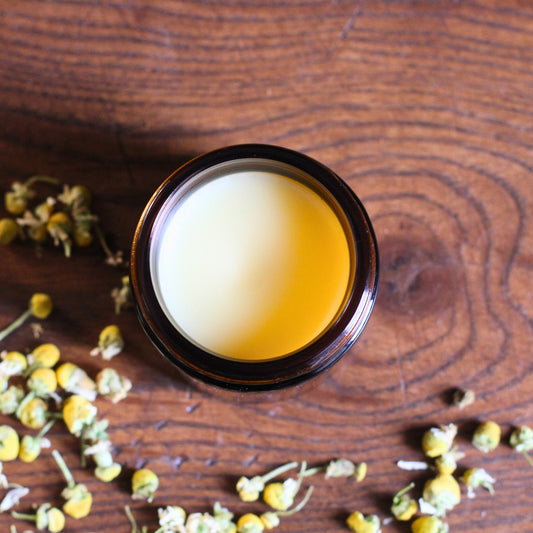
If your skin is particularly reactive, a chamomile-infused balm is often gentler than a water-based product. We use chamomile essential oil in our The Gentle Balm — blended with calendula-infused oil and beeswax for a simple, fragrance-free formula that works well on dry, sensitive, or easily irritated skin.
Around the Home
Dried chamomile flowers bring a warm, apple-honey scent to pot pourri blends. Use in herb sachets for a calming bedroom fragrance. A small bowl of dried chamomile on a bedside table is one of the simplest natural sleep aids.
In the Kitchen
Chamomile tea is the classic — 1–2 teaspoons of dried flowers per cup, steeped for 5 minutes, sweetened with honey if you like. Chamomile also works beautifully in baking — infuse into warm cream or milk for custards, panna cotta, and shortbread.
Fancy Growing Your Own?
Chamomile is one of the most rewarding herbs to grow — unfussy, generous, and beautiful in flower. Sow direct in spring or autumn in a sunny spot with well-drained soil. Too rich a soil produces lush leaves at the expense of flowers, so don't over-feed it. Thin seedlings to 20–30cm apart.
Harvest flowers when fully open on a dry day. Dry quickly at low temperature to preserve the volatile oils — spread in a single layer on a rack in a warm, airy spot. Store in an airtight jar away from light.
It's known as the 'physician of plants' — said to improve the health of everything growing nearby. A chamomile lawn, while high-maintenance, is one of the most beautiful and fragrant things you can create in a British garden.
Chamomile has been doing quiet, reliable work in the apothecary for a very long time. It doesn't need reinventing — it just needs using. Whether that's a five-minute steam, a bath soak, or a tin of balm by the bed, it's one of those herbs that earns its place every single time.
Plus the pollinators love it too! It's a great little herb to grow and use.