The botanicals that make up traditional Pot Pourri
Share
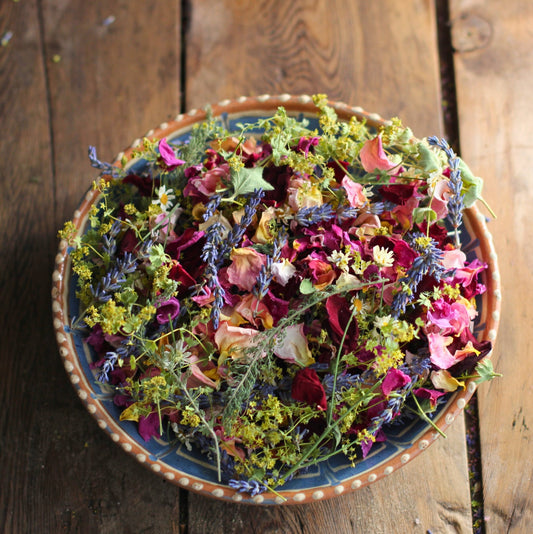
When most people think of pot pourri, they picture a bowl of dried rose petals sitting on a coffee table. And while roses have always been one of its best-loved ingredients, there's rather more to traditional pot pourri than petals alone.
Long before supermarkets were selling brightly coloured bags of synthetic perfumes, and weird looking botanicals in dyed colours, pot pourri was simply a way of making the most of the garden. Flowers, herbs and seed heads were gathered through the summer months, dried carefully, then brought together to bring a little fragrance into the house over winter.
It's a tradition that's still every bit as lovely today.
So, what is pot pourri actually made from?
The simple answer is that there isn't one recipe.
Every maker has their own style, often shaped by what grows well in their garden or local landscape. That's part of the beauty of natural pot pourri – no two blends are ever quite the same.
Some of the most common ingredients include...
Rose Petals
If there's one flower that deserves centre stage, it's the rose.
Rose petals have been used in pot pourri for hundreds of years, prized not only for their beautiful fragrance but also for the softness and romance they bring to a blend. Their gentle colours, from the palest blush pink to rich crimson, create a natural focal point in any bowl.
Not all roses are equally suited to drying, though. Some hold their colour better than others, while certain varieties retain their fragrance long after they've been picked. Harvesting petals on a dry morning, just as the flowers are fully open, helps capture both their colour and scent at their very best.
Here at Usk Valley Herbs, roses are woven into the fabric of our farm, so it's only natural they find their way into many of our botanical blends.
Lavender
Few plants are as closely associated with home fragrance as lavender.
For generations, dried lavender has scented linen cupboards, filled little fabric sachets and brought a calming fragrance to homes throughout the year. Its fresh, clean scent blends beautifully with roses, herbs and citrus, making it one of the most versatile ingredients in traditional pot pourri.
The timing of the harvest makes all the difference. Picked just as the flowers begin to open and dried slowly out of direct sunlight, lavender keeps much of its colour and fragrance for months. It's one of those plants that seems to hold onto summer long after the garden has faded.
Seed Heads and Grasses
Seed heads are often the unsung heroes of a good pot pourri.
While flowers bring colour, seed heads provide shape, texture and a wonderful sense of the changing seasons. They stop a blend feeling flat, adding little points of interest that catch the eye as much as the fragrance catches the nose.
Depending on the time of year, they might include dried grasses, wheat, oat stems or the delicate seed heads of garden flowers. They don't usually contribute a great deal of scent themselves, but visually they transform a bowl from something decorative into something that feels naturally gathered from the landscape.
Herbs
Herbs are often the quiet stars of a good pot pourri.
While flowers tend to catch the eye first, it's often the herbs that add depth and character to a blend. Marjoram, rosemary, thyme and other aromatic herbs bring gentle layers of fragrance that reveal themselves over time rather than all at once.
Many herbs also dry beautifully, keeping their shape and soft green tones long after they've been picked. Tucked amongst petals and seed heads, they help create a pot pourri that feels less like a bowl of flowers and more like something gathered naturally from a garden in late summer.
Leaves
Leaves might sound an unusual ingredient, but they're one of the things that give natural pot pourri its character.
Different leaves bring different shapes, colours and textures, creating a blend that feels relaxed and organic rather than overly arranged. Rose leaves, apple leaves and yarrow all dry beautifully, each adding their own quiet contribution to the overall look.
Unlike flowers, leaves often provide the backdrop that allows everything else to shine. They soften the brighter colours, add movement and remind us that the beauty of a garden isn't found only in its flowers.
Dried Citrus
Dried citrus has been used in pot pourri for centuries, adding a fresh, uplifting note that balances richer floral scents.
Thin slices of orange, lemon or grapefruit, along with gently dried peel, bring warm golden tones and a hint of brightness that works particularly well alongside roses, lavender and herbs. As the essential oils are released, they add a light freshness that stops a floral blend becoming too heavy.
Visually, too, citrus brings something special. The soft amber colours of dried orange or the pale yellow of lemon peel catch the light beautifully, adding another layer of interest to a bowl of botanicals.
The real beauty of natural pot pourri lies not in any single ingredient, but in the way they complement one another. Flowers provide colour, herbs and leaves add depth and texture, while seed heads and grasses give each blend its own quiet character.
But what makes pot pourri smell so lovely?
Freshly dried flowers and herbs already carry plenty of natural fragrance, but over time that inevitably begins to fade.
Traditionally, pot pourri makers used natural fixatives to help hold the scent for longer before adding a little essential oil to refresh and enhance the blend.
The aim isn't to create an overpowering perfume. Quite the opposite.
Good botanical pot pourri should smell gentle and natural, as though you've just brushed past herbs growing in the garden or opened the door to a warm greenhouse.
Why natural pot pourri looks different
If you've only ever bought pot pourri from a gift shop, you might be surprised by how different natural pot pourri can look.
It isn't always perfectly bright or uniformly coloured, because flowers naturally soften as they dry. Some petals fade, leaves become more muted and every harvest is a little different.
For us, that's part of its charm.
Nature isn't made to match a paint chart.
More than just decoration
One of the things I love most about pot pourri is that every bowl tells a little story.
Rose petals remind us of June and July in the garden. Lavender captures warm afternoons in midsummer. Seed heads speak of fields ready for harvest, while herbs bring back memories of the kitchen garden.
It's a simple way of bringing a little of the season indoors.
Here in the Usk Valley, we're fortunate to grow many of the flowers and herbs that find their way into our botanical home fragrance collection. Every blend begins with the seasons, using botanicals gathered and dried here on our family farm before being carefully brought together by hand.
Explore our collection of natural pot pourri, made with botanicals grown and gathered here on our family farm Natural Pot Pourri & Botanical Home Fragrance | Usk Valley Herbs