Scenting Your Home the Old-Fashioned Way
Share
Before plug-in air fresheners, automatic sprays and heavily perfumed candles, we had something rather simpler: flowers, herbs and a little ingenuity.
There is something rather lovely about walking into a home and catching the faint scent of lavender, roses or herbs drying in a basket. Not an overpowering blast of artificial fragrance, but a gentle reminder of the garden outside.
For centuries, people have used herbs, flowers and other natural materials to scent their homes. Long before the invention of modern air fresheners, dried lavender was tucked into linen cupboards, fragrant herbs were scattered amongst stored fabrics, and bowls of potpourri brought the scent of the garden indoors.
These were simple, practical traditions, often making use of whatever happened to be growing just beyond the kitchen door.
A little history of home fragrance
The practice of using fragrant plants in the home goes back centuries.
In Britain, aromatic herbs such as lavender, rosemary, thyme and sweet marjoram were grown not just for cooking or medicinal purposes, but for their wonderful scents.
Lavender was particularly popular for scenting stored linen, while rosemary and other aromatic herbs were sometimes used amongst rushes strewn across floors. Dried flowers and herbs also found their way into little sachets, cupboards and drawers.
Potpourri itself has a long history, becoming particularly fashionable in European homes during the seventeenth and eighteenth centuries. Fragrant flowers, herbs, spices and scented oils were combined and kept in decorative containers, allowing their fragrance to gradually escape into the room.
Of course, not everyone had elaborate porcelain potpourri pots or grand drawing rooms. For ordinary households, a simple bunch of lavender hung to dry or a small bag of herbs tucked into a drawer could serve much the same purpose.
Bringing the garden indoors
One of the nicest things about traditional home fragrance is its connection to the seasons.
In spring and summer, there are roses, lavender and all manner of fragrant herbs to gather. As autumn arrives, seed heads, dried leaves, cones and woody botanicals bring their own textures and character.
Rather than relying entirely on manufactured fragrances, it's possible to preserve a little of each season to enjoy throughout the year.
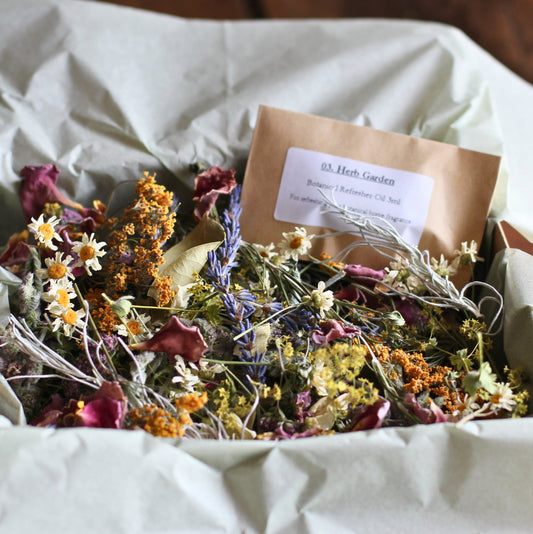
Here at Usk Valley Herbs, we grow and gather many of the botanicals that go into our potpourri. Lavender, rose petals, marjoram and other garden plants are carefully dried before being combined into our different blends.
There's something deeply satisfying about using flowers and herbs that have grown in the garden, particularly when their natural colours, shapes and textures are every bit as appealing as their fragrance.
Simple ways to scent your home naturally
You don't need a grand country house or an enormous herb garden to enjoy traditional botanical fragrances.
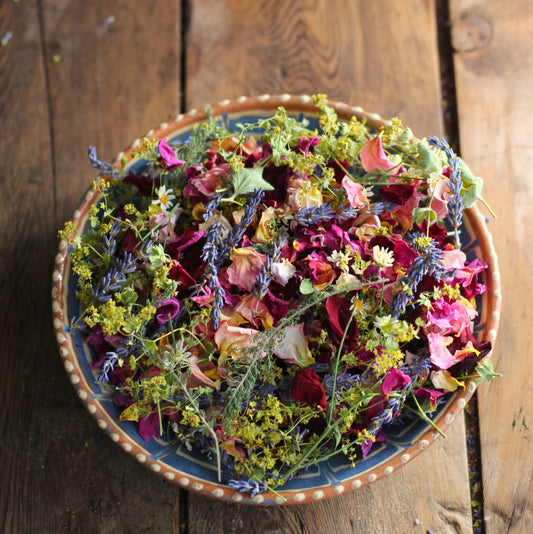
A bowl of potpourri
Perhaps the most familiar way to bring dried botanicals indoors. A bowl of potpourri can sit on a hall table, dresser or sideboard, adding both fragrance and a little seasonal decoration.
Unlike a spray that disappears almost as soon as you've used it, potpourri provides a gentler, more gradual release of scent. A few drops of suitable refresher oil can help revive the fragrance when it begins to fade.
Lavender in the linen cupboard
A small cotton or muslin bag filled with thoroughly dried lavender can add a lovely scent to stored bedding and towels.
Traditionally, these little sachets were tucked between folded sheets or hung inside cupboards. It's a wonderfully simple idea that still works today.
Fragrant herbs in drawers
Lavender is the obvious choice, but dried rosemary and marjoram can also provide distinctive herbal scents.
Keeping the botanicals enclosed in a small fabric sachet helps prevent loose leaves and flower heads becoming scattered amongst clothing.
Dried flowers for decoration
Not every botanical arrangement needs to be strongly scented. Dried roses, seed heads, grasses and herbs can add natural character to a room, particularly during the darker months when there is little growing outside.
Sometimes the pleasure is as much in the appearance of the plants as in their fragrance.
Natural fragrance doesn't have to be overpowering
One of the great pleasures of traditional botanical home fragrance is that it doesn't have to dominate a room.
Modern home fragrances are often designed to be particularly strong and long-lasting. There is certainly a place for a favourite candle or room spray, but sometimes a quieter scent is more appealing.
Natural dried flowers and herbs tend to release their fragrance gently, although their strength varies considerably depending on the plants used, their age and where they're placed.
Essential oils can also be added to botanical blends to create a fuller, more noticeable fragrance.
The aim isn't necessarily to make every corner of the house smell the same. It's about enjoying little pockets of scent: something welcoming in the hallway, a hint of lavender in the linen cupboard, or the fragrance of dried roses on a bedroom dresser.
A little piece of the countryside
Perhaps the nicest thing about scenting a home with botanicals is the connection it creates with the outdoors.
A handful of lavender gathered in summer can still be enjoyed in the middle of winter. Roses that flowered months ago can find a second life in a bowl of potpourri. Herbs grown for the kitchen can become part of the home in an entirely different way.
It's an old-fashioned approach, certainly, but not everything old-fashioned needs improving upon.
Sometimes a few dried flowers, a little lavender and the scent of the garden are quite enough.
At Usk Valley Herbs, we create botanical potpourri using flowers, herbs and other natural materials, many of them grown and gathered here in the Welsh countryside. Our blends are inspired by the gardens, hedgerows and changing seasons of the Usk Valley.