From the Apothecary: Calendula
Share
Calendula officinalis — the pot marigold. One of the oldest and most trusted herbs in the apothecary, and one we use at the heart of several of our balms. If you've ever wondered why it keeps appearing on ingredient lists, here's the reason.
What It Is
Calendula is a hardy annual with bright orange and yellow flowers, native to the Mediterranean but perfectly at home in a British garden. It's been cultivated for centuries — in monastery gardens, cottage apothecaries, and kitchen plots — valued as much for its skin-soothing properties as its cheerful colour.
The flowers are the useful part. Dried and infused slowly into oil, they release a rich concentration of plant compounds that give calendula-infused oil its characteristic golden colour and gentle, conditioning quality.
Calendula for Skin
Calendula is one of the mildest and most broadly useful herbs for skin. It's suitable for all skin types including sensitive and dry skin, and has been a staple of traditional European herbalism for generations.
It's particularly well suited to dry, rough, or weather-worn skin — the kind that comes from gardening, outdoor work, cold winds, or simply not drinking enough water on a busy day. It conditions without heaviness and is gentle enough for the whole family.
At Usk Valley Herbs, we use slowly infused calendula in sunflower oil across several of our balms. The slow infusion matters — it takes time to draw the plant's properties properly into the oil, and we don't rush it.
How to Make Calendula-Infused Oil at Home
This is the foundational recipe — once you have the infused oil, you can use it in balms, salves, and body oils.
You'll need:
- Dried calendula flowers (not fresh — moisture causes mould)
- A carrier oil — sunflower, olive, or jojoba all work well
- A clean, dry jar with a lid
Method (cold infusion — best results):
Fill a clean jar loosely with dried calendula flowers. Pour over enough oil to cover completely, leaving no flowers exposed to air. Seal and place on a sunny windowsill for 4–6 weeks, shaking gently every few days. Strain through muslin, pressing the flowers to extract as much oil as possible. Store in a dark bottle — it will keep for up to a year.
Quick method (warm infusion):
Place flowers and oil in a heatproof bowl over a pan of barely simmering water. Keep the heat very low and infuse for 2–3 hours. Strain and cool before bottling.
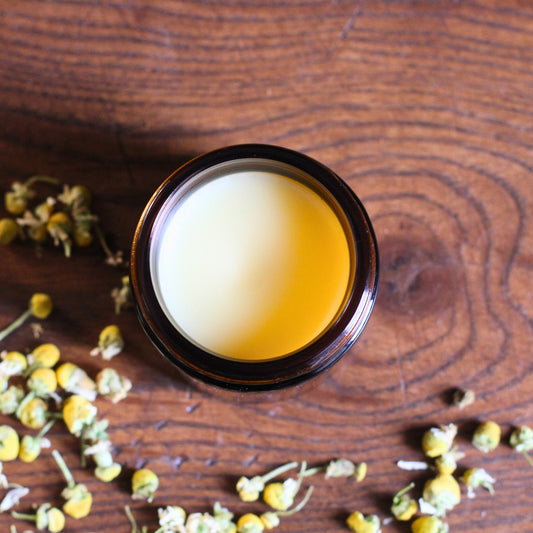
The finished oil is a beautiful golden colour and can be used directly on skin or as the base for a simple salve.
Simple Calendula Salve
Once you have your infused oil, a basic salve takes minutes:
- 100ml calendula-infused oil
- 10g beeswax (adjust for a firmer or softer set)
Melt the beeswax gently into the warm oil, stir to combine, and pour into tins or small jars. Leave to set without moving. That's it.
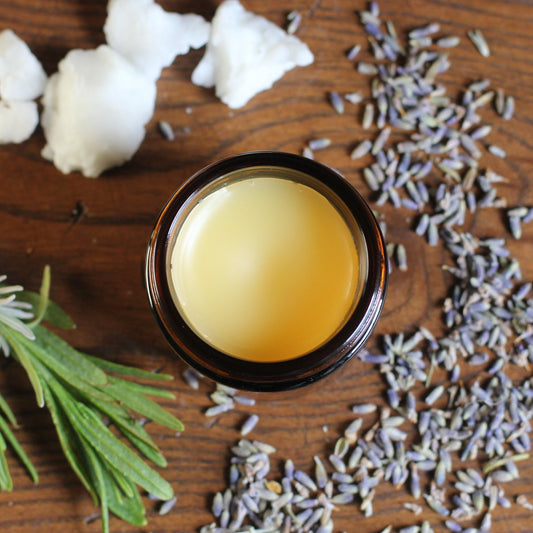
If you'd rather skip the kitchen, our The Hedgerow Balm, The Lavender Balm and The Gardener's Balm uses the same principle — slowly infused calendula in a beeswax and plant oil base, made in small batches in the Usk Valley.
Fancy Growing Your Own?
Calendula is one of the easiest flowers to grow from seed and one of the most generous — it flowers prolifically from early summer right through to the first frosts. It self-seeds readily, so once you have it, you tend to keep it.
Sow direct in spring or autumn in any reasonable soil. Full sun is preferred but it tolerates partial shade. Deadhead regularly to keep it flowering. Harvest flowers when fully open and dry them slowly in a warm, airy spot away from direct light.
It's a companion plant too — traditionally grown alongside vegetables to deter aphids and attract pollinators. A useful thing to have around in every sense.
Calendula doesn't shout. It just quietly gets on with it — in the garden, in the oil jar on the windowsill, and in the jar or bottle on your bathroom shelf. It's been doing this for centuries, and it's not going anywhere.